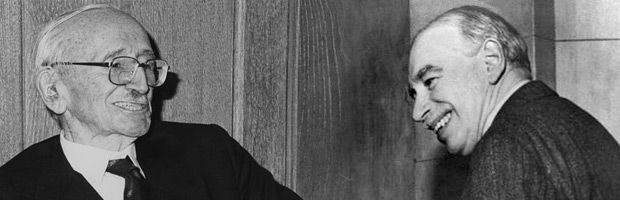
The rise of neoliberalism came with economists such as Milton Friedman and Friederich Hayek, while in the political sphere it rose to dominance with politicians such as Margaret Thatcher and Ronald Reagan in the late 70s and the 80s. The necessity for discussing neoliberalism and its rise is because one cannot understand financialization, which is one of the fundamental underpinnings of neoliberalism, without first being able to understand neoliberalism. Neoliberalism among scholars is a contested term (discussed later), and sometimes used by staunch defenders of capitalism to deflect any sort of blame and criticism of capitalism. One can indeed see this phenomen when Milton Friedman had defined all market failures out of capitalism, as in all market failures are due exogenous variables. Friedman argued that through Say’s Law all markets are inherently self-regulating including the financial sector. Quite radical in contrast to his predecessors, who belived that the financial sector was not. More on this later. Neoliberalism is the revival of Classical economics and application of Classical economics in a modern, macroeconomic context. However, neoliberalism is in some extent far more radical, but it is capitalism in its “purest” and “rawest” form. Milton Friedman gave rise to neoliberal economics and their goal was to destroy Keynes and Keynesian economics.
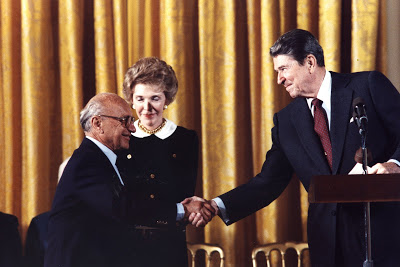
Neoliberalism is (ostensibly) fundamentally anti-state and quite fervently so. Intervention in the economy by the government and by the state is unjust, because firstly, their idea is that the “plutocrats” deserve the capital they have accumulated. Why? The free market does not discriminate, it is free game that anyone can play and succeed in. All market results according to the neoliberals are fundamentally just, fair and adheres to their inner sense of social and economic justice. What came to dominate the world of economics was the Chicago School of Economics, neoliberalism, neoclassical economics and monetarism. The government and the state will then do redistribution of wealth, if intervention, to the workers and to people who have it less well off, because the government is prone to rent-seeking and public choice theory according to the Classical economists and Neo-Marxian economists (and other heterodox economists). This to the classical economists is inherently unjust and unfair, because the workers at the bottom did not deserve the wealth that capital has accumulated. This, in the Classicals’ view, will hamper investment and it will interfere with the free markets, which is unnecessary, because the market will solve these problems. That is if their axiom of Say’s Law holds true, as in supply creates its own demand, however as critics rightly point out it is an unreasonable assumption. In addition to the fact that if Say’s Law holds true, then the last decade of economic history with regards to the liquidity trap could not have happened.
Financialization
What exactly is financialization? Defining financialization can be tricky. Heterodox economic scholars and some orthodox ones disagree on what financialization is. The reason for this is because it is a relatively new field of research, as in the scope of articles around the topic span all the way back to 1970s, but the proliferation of articles studying it are few. Therefore, this essay has decided to use Foster and McChesney’s definition of financialization. It explains thoroughly the process of financialization and as it relates to the US capitalist economy. Financialization is the process of financial institutions and financial markets hollowing out the real economy (Foster and McChesney 2012, 4-12). Financialization, in addition to this, is the idea that financial institutions and financial markets are self-regulating and that it does not need state interventon or regulation. Indeed, capitalism necessitates annual and continuous growth and through finance this requirement is being fulfilled with financial instruments designed for investors to make a quick profit. What does this mean? Well, simply put, it means that the ever-increasing reliance of the US capitalist system upon financial markets and institution is key. Another scholar puts this into perspective with the notion that financialization is what underpins neoliberalism and grants it the right to live (Fine and Saad-Filho 2017). On this point, there seems to be an agreement among scholars such as Duménil and Lévy:
“Most, if not all, analysts on the left now agree that ‘neoliberalism’ is the ideological expression of the reassertion of the power of finance….(moreover)…although the return of finance to hegemony was accomplished in close connection with the internationalization of capital and the globalization of markets…it is finance that dictates its forms and contents in the new stage of internationalization.”
(Epstein 2005, 5).
Firstly, that is why it is necessary to explain financialization, because it is crucial to understand. Indeed, as one might deduce from the excerpt, the repeal of Bretton Woods is ideological in nature, and an ideological reassertion of monopoly-finance capitalism (Foster and McChesney 2012, 34-40). In addition, it is deeply rooted and connected within power relations between capital, finance and the state. However, the repeal of Bretton Woods is a major chess piece in the processes of financialization and following its logic it is natural to have such expectations from the repeal of Glass-Steagall (Glass-Steagall separated investment banking and commercial banking, while also containing other very key banking regulations from the United States Banking Act of 1933) through the Gramm-Leach-Bliley Act of 1999. One cannot rule out the power of ideology, but in addition one cannot rule out the corruption that happens in such relations without the sort of deals that one would associate with politics. The power of ideology can be seen when Senior Milton Friedman had defined all market failures out of capitalism and through the fundamental axioms of classical economics stated that all markets including financial markets are self-regulating. Thus, all failures of capitalism are due to exogenous factors and variables. A far more radical approach than his predecessor Adam Smith, who warned of the dangers of financial institutions and markets, because of the incredible economic power that it holds. However, as we have seen here, one of markers of financialization is the rise of neoliberalism in the 1980s in the United States with the rise of Milton Friedman building the ideological basis, which transferred onto the political arena through Ronald Reagan and other political actors. This then came to dominate economic thought and one can later see politicians across the modern world adopt neoliberalism as their economic paradigm. Another example how neoliberalism came dominate economic thought and became the most significant paradigm (for good or for worse) of the 1980s until today is the European Union. The European Union and the Eurozone adheres to the Neoliberal economic paradigm. The European Central Bank or ECB is a monetarist system, which means simply put that number one goal of the ECB is controlling prices (inflation). Monetarism is a school of economic thought within neoliberalism that emphasizes the role of governments or central banks to control inflation by using interest rates. Monetarism or mainstream monetary policy is not Keynesianism, because Keynes did not subscribe to the monetarist view. This is were Friedman comes in, he believed that one could in the short term use monetary policy, as in before 1990s, to increase the supply to effect real economic variables in he short term, but in the long run it would not have an effect. The neutrality of money axiom becomes critical here. The neoliberal argument is that money does not have any effect on real economic variables as in GDP and uneployment in the short and long run. However, that has changed. Now monetarists and neoliberals alike are willing to engage in monetary policy and more specifically increase the supply of money through quantitative easing, and using interest rates to try to steer the economy in the short run. Another point to hammer out is the structure of the EU, the ECB and assymetry of the European economies makes this difficult. The spread in inflation (the difference in the rate at which prices becomes more expensive in a country) is very different from country to country. Thus, there will be a need for different interest rates in different countries. Let me give an example; the French economy starts booming, and in turn causes inflation, let’s say 5 percent, then the Spanish economy takes a downturn and inflation drops to 1 percent. The Spanish would rather have a low interest rate, while the French want a higher one. The Spanish want to stimulate growth through monetary policy, while the French wants to cool down the economy.
This was a short introduction and overview of what neoliberalism is and what financialization is. I hope this short essay has inspired some of you and sparked an interest into political economy, and economics in general. Thanks for reading.
 21st Century Poltical Science