Introduction
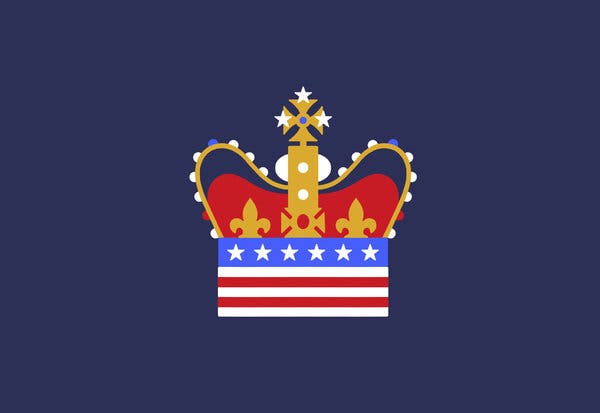
Increasingly over time monarchies and people who are in favour of monarchy have been associated with the right wing, however, that is not necessarily the case. In this post I will make a cohesive, consistent and coherent left-wing argument in favour of constitutional monarchy.
Truth and Power: Pluralism – The Left-Wing Ideal
Truth in society is determined by power. With power truths in society are shaped and formed. A good example of this is contemporary mainstream economics, which has failed to produce the growth promised and has failed on every level to predict economic disasters. However, mainstream economics benefits those in power, therefore it is the truth about economics, while Keynesianism (that doesn’t benefit elites) have been discredited and is no longer the truth. Thus, power should be pluralistic; it should have multiple nodes in societies, where political, social and economic power is shared in society. Power cannot become overtly centralized in one node otherwise problems and certain dangers may rise. Although, the monarchy today in all western liberal democracies hold no political power, they hold social and power through being able to unite the people. The monarchy represents the people and their only concern should be whether the people of the nation are being served justice, equality, liberty, fairness and peace. This is perfectly consistent with social corporatism, which has also been coined social democratic corporatism. It is a form of economic tripartite corporatism. It is based upon a social partnership between the interests of capital and labour. It involves collective bargaining between representatives of employers and of labour mediated by the government at the national level. However, more generally speaking, it is about there existing pillars in society, often institutions, that hold power and that can be influenced by the nation, while also at the same time being rigid enough to resist the urges and wishes of populists.
Hierarchies: Neither Left nor Right
However, some may argue that hierarchies are inherently right-wing, but this is a mistake, there can exist hierarchies within left wing social democratic countries. Hierarchies are not necessarily right wing, although some may argue that the purpose of left-wing ideologies is to break down hierarchies and this is true, but only to a certain extent. Let us take an example, Norway is the perfect example of social democracy while having a constitutional monarchy, and their job is act as a symbol of the nation and be glorified diplomats. The constitutional monarchy serves the role of being the representative of the nation (I define the nation and nationalism later) and they hold the power of being able to unite the people against a foreign invader/enemy when elected officials fail to act. To give an example, when the Nazis invaded Norway 9th of April 1939, the elected Labour government with prime minister Johan Nygaardsvold, failed to the see the Nazi threat and failed to act. Crown Prince Olav and King Haakon VII anticipated the Nazi attack and had told the Labour government they needed to ready the army and population for a war with Germany, however, their words fell on deaf hears and when the attack came Norway has completely unable to defend themselves from the foreign aggressors, while the government and royal family had to flee the country. Quisling of NS (Nasjonal Samling – ts: National Assembly) enacted a coup d’etat, and the King refused to surrender and recognize the illegitimacy of the Quisling government. This united the people against Germany and the illegitimate government. Many on the left will agree with King’s action, thus my question to those who agree is simply this; if you believe it is justified in certain situations to interfere against the government, then when is that and where do you draw the line?
Indeed, this is a hard question. I think the monarchy has every right to interfere in times of war where the elected government cannot act in times of war, and I believe the monarchy has every right to interfere with democracy. The latter being contingent upon one criterion, that being if they believe that the elected government is acting in ways that are directly harmful to the nation and they are undermining the nation.
Nationalism and the Nation: What is it?
I define the nation as a person’s blood, to see where they come from, and who their ancestors were. It also looks at the soil a person is working on, to make a claim that they should indeed work and occupy that land. It is a combination of jus soli and jus sanguinis, that is who the Norwegian nation is, and they should have the right to self-determination and the right to their ethnically homogenous homeland. You are tied to your ancestors, it is not an accident of birth, you can only be what you are, and you are tied to the land that your forefathers worked. Then you and your tribe, your people have a intrinsic right to the land that no one else has. Nationalism in my view, then is inherently anti-international late stage finance capitalism, and it is the king who should represent the Norwegian people. The Norwegian king has a democratic claim to the Norwegian throne due to the fact he was elected and his descendants hold the same claim, however, if the King or Queen betray the nation, then the nation has the right to take it upon themselves to depose the royal family to either reinstate a republic or another royal family. Thus, being a monarchist does not entail that you must support a certain monarchy, but it entails that you support the idea of constitutional monarchy. This is fundamentally a two-way street, where the monarchy has the right to interfere with democracy and protect its people, and the people have the right to depose of the royal family if they act tyrannical.
 21st Century Poltical Science