
1.0 Introduction
I shall explain how socialism can work on a larger scale than the mere camping trip thought experiment of Cohen (Cohen 2009, 3-7). An often brought up criticism of socialism is that it cannot work in larger-scale societies. They argue that on the camping trip everyone knows each other and has family ties or friendly ties to the others. However, in this paper, I shall explain how nationalism and socialism go hand in glove, as I shall explain and untangle the ideology of fascism and how socialism can coincide with it.
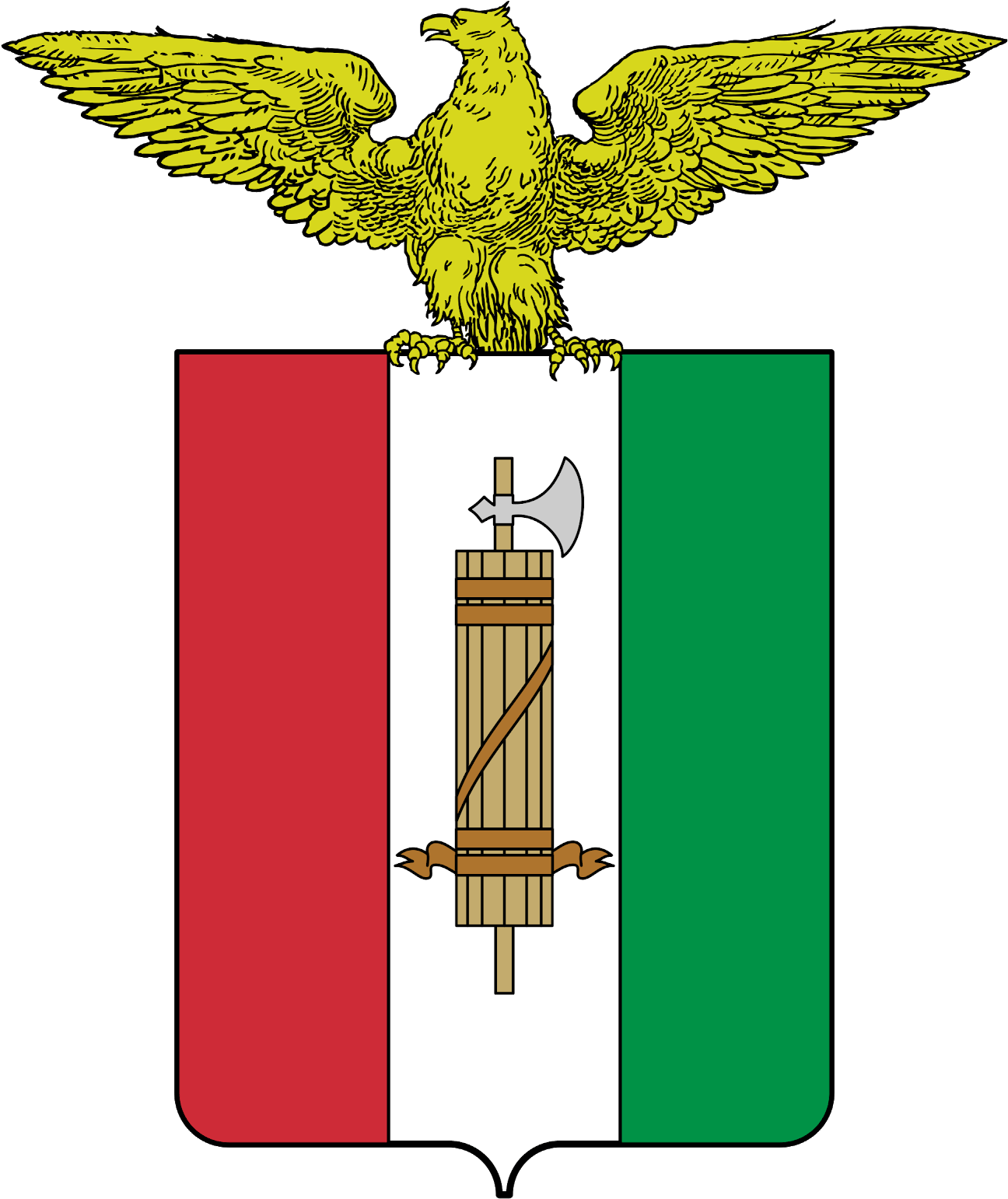
I shall take the Cohen campaign trip thought experiment, and I shall argue that national socialism and fascism do not suffer from the same conundrum, but while ideologically speaking, it can retain many socialistic features. Cohen argues that a community aspect is necessary, however, the analysis is incomplete (Cohen 2009, 34; Aarebrot and Evjen 2014). Therefore, I shall argue in this essay that national socialism and fascism can solve the puzzle put forth by the critics of Cohen. I shall explain and put forth critical distinctions between fascism, national socialism, and socialism, while Cohen’s socialism suffers from the criticism of “it could work on a campaign trip, where everyone knows each other”, the two former ones does not. To a younger audience, it might be better to use the video game Minecraft as an example rather than a campaign trip, because the same logic applies. Although national socialism is derived from fascism, it is fascism with a racialized and ethnocentric and racial spin (Ball et al 2016, 199-220). It must be mentioned that I am not an advocate of fascism or national socialism, this essay is mainly theoretical and philosophical rather than empirical, thus I make the distinction between philosophy and the application of it. Although, I shall sometimes point to certain cases later in the paper to prove some points, however, the paper is mainly theoretical. This paper is by no means advocating for these forms of philosophies being applied, and the same goes for socialism and communism in my view. This paper is dedicated to explaining, untangling the philosophy of Fascism. The main goal of the paper is; Explain fascism and national socialism and explain how fascism does not suffer from the community aspect of Cohen’s socialism while retaining many socialistic elements and being inherently socialist in many ways. Fascism and national socialism are spiritualistic philosophies and are a revival of German Idealism and embraces the counter-Enlightenment (Ball et al 2016, 199-210). However, I shall argue that the fundamental metaphysics of Fascism comes from its etymology, as in the fasci, which is something that far predates the early 20th century and that has been argued to come from Roman times (Gentile and Mussolini 1932). Thus, fascism as a concept, a philosophy, and as an ideology did not come from the 20th century. Although, Giovanni Gentile is credited with birthing fascism due to him being the most influential and explaining the metaphysics of fascism, however, the fundamental principle of fascism is “together we are strong”. Many sticks bundled and tied together in a fasci, where the sticks represent the nation/tribe, and the ax in the middle represents the will of the nation/tribe manifesting itself in a strong leader (Gentile and Mussolini 1932).
Moving onto Cohen’s socialism.
2.0 Cohen’s Socialism: A Discussion & Explanation
Here I shall give a brief explanation of G.A. Cohen’s socialism and his thought experiment. The thought experiment begins as follows; imagine yourself on a camping trip with your friends or family or imagine yourself playing Minecraft with your friends and family. In this scenario, socialism would be the most attractive alternative out of all the feasible alternatives. The principles of socialism in Cohen’s view are twofold; firstly, equality, and secondly community. Although, Cohen argues that there would be no hierarchy between the people on the campaign trip and that the main goal of the campaign trip is that everyone should have a good time. This is a radical egalitarian view; however, it is not quite correct. Socialism does believe that one should minimize hierarchies, but they cannot be removed completely. Even on a campaign trip, a hierarchy might form naturally because the people on the campaign trip have different skills. There might be a person who is good at fishing and is very competent at catching a lot of fish. Therefore, the “fishing master” of your group will gain authority within his field of expertise and he can show the others how it is done. This fascism would argue is a natural hierarchy formed out the peoples’ inherent natural inclinations towards certain things such as fishing. You need someone to make decisions on certain areas due to their expertise within such an area since one person cannot exceed at everything. In addition, one has familial hierarchies where children cannot be trusted to make very complex decisions that have big consequences, they need their parents to be authority figures and have the parents guide them through life. Such hierarchies are inevitable, and one cannot do away with such hierarchies, however, such hierarchies can be minimized (Cohen 2009, 3-20). Indeed, Cohen admits this is the case already when he said that each member of the campaign trip brings something to the table. One person may bring fishing rods, another a football, and another a deck of cards et cetera. Each person brings something to the table on the campaign trip, which makes it highly likely that said person who brings the fishing rods already knows how to use those fishing rods (Cohen 2009, 12-30). Moreover, Cohen does not argue for equality of outcome as socialists have argued, but for equality of opportunity, which fascism agrees with. Fascism is about creating a stronger nation and stronger people through self-actualization (Gentile and Mussolini 1932). Fascism believes that one should have the opportunity to self-actualize even if you come from a poor family.
2.1 Cohen’s Socialism: The Conundrum
It is the second element of Cohen’s socialism that runs into the problem and critique. The problem with Cohen’s socialism and something that he admits in his book are that socialism is largely a materialistic philosophy, and it needs the support of a community aspect, which goes largely unexplained on how it will work in large scale societies (Cohen 2009, 30-36; Kymlicka 2002, 166-180). Marxism and Communism also suffer from the same fundamental problem, that they are materialistic philosophies, and they are most concerned about the material rather than the spiritual. Marx viewed organized religion, a form of spirituality, as an opiate of the people that kept the disenfranchised proletariat from action. However, spirituality and religion can be a very necessary component of social cohesion.
3.0 The Metaphysical Ontology of Fascism and National Socialism
The metaphysical ontology of national socialism and fascism differs quite drastically from liberalism, and socialism. While, liberalism and socialism adamantly embrace the enlightenment and subsequently embracing the metaphysical ontology of it which stems from Christianity and its universalist principles (Ball et al 2016, 199-209; Gentile and Mussolini 1932). The first liberals being theists and believing that all individual rights and freedoms comes from God (Kymlicka 2002, 53-60, 102-112). The individualism and the enlightenment are a common thread throughout modern moral, ethical and political philosophy. Moreover, in fascist ontology of being your existence, your being and who you are is not only inexorably tied to your tribe/nation, it is inevitably tied to the spirit of history. The spirit of history is the accomplishments of your tribe, their spirit lives in you, and you are apart of something far greater than the mere existence of yourself. You are not only yourself; you are apart of the living spirit of your people and of your nation that spans thousands of years. For Mussolini and the Italian nation, it was the legacy of the Roman Empire, and his ambition to re-create the Roman Empire can clearly be exemplified by him building EVR in Rome (Gentile and Mussolini 1932). EVR is a district in Rome, where the architecture follows the exact same style as traditional Roman architectural style. For Mosley, it is a lot more unclear and that is due to the history of the English people, the genocides that happened, the Norman invasion, the Viking invasions et cetera. It creates a murky image of the British people; however, the same idea holds for Mosley (1936, 20-29). The ontology of being for fascism is then as mentioned the fasci,however, it spans not only across the contemporary nation but also your temporal nation. It is the spirit of history, that live on in you and your nation, which gives rise to a powerful form of nationalism. You are not only living together in a country but are a part of the same spirit that spirit is the sum of all the people in your tribe and in your nation. The spirit is the past, the present and the future, the future is if your nation is strong enough to survive and carve its way into the future (Gentile 2004a; Gentile 2004b, 24-66).
However, one must also see Fascism as rooted in history.
3.1 Fascism as rooted in History
To go by the Oxford dictionary definition of Fascism, it is rooted in history. The definition is as follows:
(Oxford Reference 2020).
“Fascism tends to include a belief in the supremacy of one national or ethnic group, a contempt for democracy, an insistence on obedience to a powerful leader, and a strong demagogic approach. The name comes from Italian
fascismo, from fascio ‘bundle, political group’, from Latin fascis ‘rod’.”
Fascism holds a contempt for full-franchise modern representative democracies; however, it does not hold all forms of democracy equally in contempt (Gentile and Mussolini 1932, 3; Mosley 1936, 4-15). Fascism as a philosophy and ideology can be democratic, although not in the same sense. Mosley wanted a syndicalist (socialist) fascistic democracy, where it would be corporativist, while representatives would be voted for and elected into a chamber based on industry. Say you are a worker in fishing, Mosley then argued that you would have competence on matters regarding fishing, so you would elect and vote in representatives on such a basis (Mosley 1936, 23-50). Indeed, such a historical context cannot be forgotten when one wants to develop a fully functioning and working definition of fascism. Moving on.
3.2 The Formlessness of Fascism
Gentile describes Fascism or Actualism to be formless. What does that mean? Well, as I have already discussed one must view fascism as rooted in history and one must not forget the ontological basis of being in fascism, because it is so radically different from the contemporary philosophy literature that one might see on university syllabuses as we discussed. Gentile argues that Fascism/Actualism is rooted in the history of action rather than ideas. Indeed, Gentile continues:
(Gentile 2004b, 18)
“Fascism was not an association of believers, but a party of action, that had need not programs of particulars, but an idea, that indicated a goal, and thereby a way to be followed with a resolute will—- that refused to acknowledge obstacles, because ready to overcome them. Was that will revolutionary? Yes, because it anticipated the construction of a new State.”
Indeed, fascism is revolutionary and not reactionary as many as described it to be, because fascism is not necessarily about conservatism or returning to old and social, economic and political order, but to construct a new one on the ashes of the old order which had already been built and conceived by the nation earlier. So, the spirit of history and the spirit of the nation must evolve and through the will of the nation the new social order shall be constructed (Gentile 2004b, 4-46; Gentile and Mussolini 1932; Gentile 2004b, 326-350). However, since fascism is also a revival of German idealism, then fascism rejects the principles of the Enlightenment. They embrace the Counter-Enlightenment, which was movement that occurred 200 years prior to the 1920s. Fascism rejects the idea of rationalism, secularism, progressivism and universalism (Ball et al 2016, 200). Fascism does indeed reject the Kantian notion of humanism; however, it must be mentioned that it does so on the grounds that it is an individualistic outlook (Gentile 2004b, 14-23). Indeed, fascism does not believe in the idea of rationalism and rational choice theory, and they believe that humans more often are driven by emotions and their inner desires rather than a cost-benefit analysis and utilitarianism (Kymlicka 2002, 10-60). Fascism does reject the separation of church and state and think that organized religion such as Christianity is necessary to rule over a nation. Herein lies something of a contradiction, because Christianity is universalist, but fascism rejects it. The basis of Christianity is universalism and humanism. Fascism rejects both. Of course, fascism does not believe in universalism, because they believe that national, ethnic and other differences run extremely deep. Fascism believes that progressivism and progress is not always good, and that technology can bring great harm and disaster, so in that kind of sense fascism is conservative (Ball et al 2016, 199-220; Gentile 2004a; Gentile 2004b).
3.3 Fascism and Luck Egalitarianism: The Accident of Birth
Here I would like to narrowly discuss fascism and its views on the argument of accident of birth, because this is important for socialism. Fascism is not opposed to idea of equality of opportunity, although this equality extends only to the tribe and the nation, which is a definitional issue, which shall be discussed in part 4.0 and 4.1. All nation-states today operate on the principle that equality and rights are given to the general population through the state. Although, you have international courts and human rights, which complicates matters slightly, but citizens of the nation-state are the ones that are granted rights and privileges such as universal single payer healthcare and other such rights. However, in fascism these rights are not considered to be individual rights, but rather group rights (Gentile and Mussolini 1932). It is not an accident of birth; you are not a video game, or a software slotted onto a machine. In the fascist conceptualization of being, then your existence is your tribe’s present, past and future. You cannot possibly be anything else, therefore, it is not an accident of birth in their view. Therefore, such an inequality does not need to be amended or fixed. It does not either give any other nation or tribe a right to your land or to be a part of your tribe, although, it is possible in some fascist conceptualizations of the nation to become a part of it.
Moving on to nationalism.
4.0 Nationalism: National Socialism & Blood and Soil
This part will deal heavily with nationalism, and the fundamental principles of fascism and national socialism. The main distinction between fascism and national socialism may not be immediately obvious to a reader who is not familiar with the literature and may confuse the two and use fascism and national socialism interchangeably. However, this is a mistake, and one should confuse them or use them interchangeably, because there are meaningful and pertinent distinctions. Although, I am using fascism as a catch-all term, it is necessary to distinguish national socialism and fascism. National Socialism is all about blood and soil. Blood and soil is a racist and xenophobic type of nationalism, this means that their ethnic and racial group is the only one that can be a part of the country and nation. The general idea is that people who worked the land for generations upon generations, and who are tied to the people who worked that land by blood, then you have an inherent and intrinsic right to that land. It is ethically and morally just for you to have ownership over that land, which is different from the Libertarian and Marxian Socialist perspective of ownership, however, the central key element here that ties national socialism and Marxian socialism is the collective ownership over the land and the soil (Kymlicka 2002, 20-90; Aarebrot and Evjen 2014, 258-300).
4.1 Nationalism: Fascism & The Nation as presented
Nationalism as the nation presented is very different to a nationalism that is based upon ethnicity. This was the Italian Fascistic take on the nation and nationalism. Their nationalism is based upon the people within the Italian Empire, who are the nation, they are the sticks around the axe in the fasci. Indeed, Mussolini had ambitions to recreate the Roman Empire, which historically was dominated by Romans as an ethnic group in government and elsewhere, however, it did not exclude people from being able to partake and become citizens unless they were slaves or women. Thus, in some ways it did exclude some, however, it did not exclude on the mere basis of race or ethnicity. Indeed, Mussolini did not believe in biological races, which runs completely counter to the blood and soil nationalists, who believe in biological race and believe in jus soli and jus sanguinis (Aarebrot and Evjen 2014, 120-160; Gentile and Mussolini 1932). This is the most inclusive form of fascistic nationalism, and it could potentially go hand in glove with other theories of citizenship (Kymlicka 2002, 284-300). It could also potentially work well with multiculturalism, although, theoretically possible and it could be bridged and amend, there are still massive question marks surrounding this, and if it could work empirically speaking. It could potentially just end in one ethnic group dominating the others, and them not having equal rights to the main group.
5.0 The Distributional Consequences of Fascism and National Socialism: The State & Democracy
The ideal nation-state portrayed in Aarebrot and Evjen is the titular nation-state, which is a unitary state rather than Federal, it is in addition democratic. The way in which most societies today are structured is through what is known as a titular nation-state (Aarebrot and Evjen 2014). As we have discussed, the nationhood distinction between fascism and national socialism is key, because it determines who is in your tribe and who can be a fully-fledged member of your nation-state and receive all the rights and freedoms that it entails. Therefore, the ideal of nation-state described in Aarebrot and Evjen is where there is an overlap between the nation and state. The state is, in the fascist and national socialist view, a tool of the tribe, of the nation to manifest the will of the tribe. Socialism in the same vein views the state and democracy as a tool for the working class to seize power and distribute resources evenly and fairly. The fascist ideal is also to be democratic according to Mussolini, although there are many different types and kinds of fascism, and some believe the best way and the correct application of fascism is dictatorship. The British version of fascism is socialistic and democratic in nature. Fascism is a form of socialism, and that is why tens of thousands of Brits flocked and joined the British Union of Fascists, because they believed they could solve the problems of slums, hunger, starvation, poverty and to empower workers to a real extent (Mosley 1936, 10-30). Thus, in fascism there is no right or wrong answer to the democratic question, so may want to pursue the ideal of democracy, while others pursue dictatorships, and some may pursue a democratic system with adjectives like Mosley.
5.1 The Distributional Consequences of Fascism: The Economics
Fascism is highly nationalistic; this will have consequences for the economics of such a system. I shall argue that Fascism can be coupled successfully with post-Keynesianism, as in the ideas of John Maynard Keynes, and not the area of economic prosperity in the United States from 1950 until the mid-1970s. Fascism is therefore not only compatible with socialism, but a part of what fascism is, however, not necessarily socialism in the way that Karl Marx envisioned, but a system that empowers workers, and privatization would happen with strings attached and regulation. Therefore, the kind of privatization that one saw in Nazi Germany for example was not the kind that could be associated with free market economics and was more of a command economy (Bossone and Labini 2016). And of course, one of the
ways in which Fascism and Socialism agree is over the idea of exploitation. Fascism as I have argued throughout this essay, in the fuller definition and barebones definitions are inherently socialistic, and so are most third-position ideologies (Gentile and Mussolini 1932). Due to the “privileged position of business” and social domination, meaning the active prioritization of the interests of business owners over labourers by politicians, due to the nature and structure of capitalism. Where all political parties must recognize this fundamental fact. They will then try and create a friendly business environment. This creates a structure in which politicians and business owners are tightly knit together. Indeed, this is mutually beneficial relationship, and this happens even without the sort of social networking and the deals that one would associate with politics (Tatham and Peters 2016, 100-119). Fascism has dislike for such a structure, because political parties have been forced to recognize the institution of private property and the nature of investment. However, since real capital investment is the driving force of the economy, the state can also do real capital investment instead of relying solely on investment by private firms that may or may not occur (Skidelsky 2009, 150-200). However, not only this, capitalism is not only contained to a single country, it is an international phenomenon. Indeed, as Duménil and Lévy notes on international monopoly-finance neoliberal capitalism and financialization:
(Epstein 2005, 5)
“Most, if not all, analysts on the left now agree that ‘neoliberalism’ is the ideological expression of the reassertion of the power of finance….(moreover)…although the return of finance to hegemony was accomplished in close connection with the internationalization of capital and the globalization of markets…it is finance that dictates its forms and contents in the new stage of internationalization.”
In the same vein of this, the fact that the state and capitalism exist, power will continue to recreate itself in forms of other outlets of power. The very structure of capitalism and the nature of the state has and will allow economic power to translate into social power, but also very crucially into political power. That is the privileged position of business. Business owners or capital are responsible for everyone’s economic well-being in society. This is known as “the dependence of the state upon capital” (Tatham and Peters 2016 100-110, Foster and McChesney 2012, 5-29). This happens even without the sort of deals that one would associate with politics as mentioned (Peters and Tatham 2016, 100-105). Fascism is very sceptical towards capitalism. However, if one views this in conjunction with the standard socio-economic left right spectrum, then fascism would find itself to the left (Ibid 2016, 100-119). However, that is incorrect, fascism argues that direct state involvement in a more equal distribution of resources, wealth and income is very important (Ibid 2016, 86; Gentile 2004, 10-15; Gentile and Mussolini 1932; Mosley 1936, 3-11). Indeed, it would then be an economically left-wing movement, but one more in the vein of what one would consider to be old labour in some respects, however, this is not to say that fascism is a left wing movement, but it is saying that fascism was a socialistic right-wing movement. Where they focus on the role of the state, the role of hierarchies, the role of spiritualism, the role of nationalism and building a corporativist society. For example, the Scandinavian style societal corporativist/corporatist systems were borne out of the fascist style of state corporativism (Caramani 2014, 81). Fascism is against the developments of international finance capitalism, which can be exemplified by FIRE. FIRE meaning the share of GDP that is going towards Finance, Insurance and Real Estate (FIRE) as percentage of total goods-producing Industries Share. The FIRE portion of national income expanded from 35 percent of the goods-production share in in the early 1980s to over 90 percent in recent years, as Foster and McChesney notes. The economic booms of the 1980s and 1990s were due to the expansion in the financial speculation sector by increased leveraged debt that came from the private sector (2012, 18). This narrative of the economy fundamentally shifting in the US from production to speculative finance is of high concern to fascists. The rapid expansion of FIRE is a manifestation of international finance capitalism. The authors note again:
(Foster and McChesney 2012, 18)
“In the face of market saturation and vanishing profitable investment opportunities in the “real economy,” capital formation or real investment gave way before the increased speculative use of the economic surplus of society in pursuit of capital gains through asset inflation.”
This development of international finance capitalism and internationalization of markets is ofhigh concern to fascists, because they believe that these are unnatural hierarchies, but also because they are fundamentally against private property due to their principles of nationalism as discussed earlier. Thus, the inherent nationalism of fascism and their fundamental principle of the fasci and their ontology of being, fascism is anti-capitalist and they are against the fundamentals of neoliberalism as discussed. However, this must not be mistaken for that fascism wants to achieve a socialist society, that is incorrect, but they would create a society that is authoritarian, if not totalitarian (not necessarily so), that is nationalistic, autarkic and has many anti-capitalist sympathies and socialistic elements.
4.3 The Distributional Consequences of Fascism: Monetary Policy
In this part, I shall show how modern monetary policy is operated by most central banks, and what you could do with modern monetary policy. Fascists and fascism believe in an idea known as modern monetary policy or MMT for short. This part is theoretical and empirical, however, the most important notion to understand is that money is not real in the way that you and I think of money as being real. Money is something that we need, and it has value to us because we need money to buy goods and services that sustain us. At the level of control of a central bank, then money starts to take a completely different shape, it is not real. It is a number inside of a computer, it is many different accounts, where the central bank can markup accounts and effectively print money. Indeed, former chairman of the Fed Ben Bernanke admitted this fact in an interview with 60 minutes:
“Asked if it’s tax money the Fed is spending, Bernanke said, “It’s not tax money. The banks have accounts with the Fed, much the same way that you have an account in a commercial bank. So, to lend to a bank, we simply use the computer to mark up the size of the account that they have with the Fed. It’s much more akin to printing money than it is to borrowing.””
(James 2010)
Indeed, at the time of this writing the world is in the middle of a recession due to Covid-19, and the central banks’ bazookas have come out clearly. All central banks are effectively using MMT to steer themselves out this recession. Some may ask the pertinent question; What is MMT? MMT has three core tenets.
Firstly, a) almost all sovereign governments today have a monopoly of issuing their own fiat currencies, b) this essentially means that governments are not revenue-constrained, because it is the creator of its own fiat money, c) in technicalities then due to fiat currencies taxes and bond issues do not finance government spending (Skidelsky 2018, 99-120). Indeed, most economists today agree that this is the case in the modern world, however, people have drastically different views on whether it is just, fair and ethical to do, and they differ in their view of the consequences of MMT (ibid 2018, 30-90). Fascism embraces MMT as a tool of the state and the government to enrich their own people through real capital investment in such projects such as roads, infrastructure, healthcare, pensions and more (Mosley 1936; Gentile 2004b, 14-54). Indeed, and this was done in Nazi Germany to take an example under Hilmar Schacht (Bossone and Labini 2016). To be sure, in the view of fascism, it is not the nation that is going to serve markets, but the other way around, and fascism does believe in pursuing a greater goal that could be defined by the nation itself, that is the will, and equality of opportunity and equal social, political and economic rights within the nation is highly possible and desirable in the fascist view. Although, some may take a more conservative view, and both are equally valid in fascism and national socialism. Fascism can then print as much money as needed and this spending is only limited by inflation (Skidelsky 2018). However, to conclude this. What is that we have discovered about fascism and national socialism.
6.0 Conclusion: What is the take home message?
The take home message from this essay is that the political philosophy and ideology of fascism has some very key core elements constituting what fascism is and how it operates. However, one should not forget either that fascism is socialistic in nature, it encourages intratribal compassion and empathy, while in addition, fascism believes in equality of opportunity for everyone within the tribe. It can have political equality for everyone in a way that encourages its more socialistic side or it can embrace its more conservative side. There is noright or wrong answer to this, and they are both equally valid interpretations from the essence of fascism. In this essay, I have tried to capture the essence of fascism, while emphasizing itsmore socialistic side and showing that fascism’s socialistic side does not suffer in the same way from Cohen’s campaign trip experiment. While Cohen’s community aspect is lacking, I
have definitively shown that fascism revels in the aspect of community through its ontological basis of being and its ultra-nationalistic tendencies. I have shown that Fascism can use the tool of the state, the central bank to the benefits of their interest groups. Such as the poor, the workers and nation, but which is at the expense of multi-national corporations and finance
capital.
Bibliography
Aarebrot, Frank and Kjetil Evjen. 2014. Land, Makt og Følelser. Bergen and Oslo: Fagbokforlaget
Ball, Terence and Richard Dagger and Daniel O’Neill. 2016. Political Ideologies and the Democratic Ideal. London and New York: Routledge.
Bossone, Biagio and Stefano Labini. 2016. “Macroeconomics in Germany: The Forgotten Lesson of Hilmar Schacht. Vox CEPR Policy Portal, 1st of July 2016. Date accessed: 10.04. 2020. URL: https://voxeu.org/article/macroeconomics-germany-forgottenlesson-hjalmar-schacht
Caramani, Danielle. 2014. Comparative Politics. Oxfordshire, UK: Oxford University Press
Cohen, Gerald Allan. 2009. Why Not Socialism? Princeton and Oxford: Princeton University Press
Epstein, Gerald A. 2005. Financialization and the World Economy. Cheltenham, UK and Northampton, Massachusetts, USA: Edward Elgar Publishing, Inc.
Foster, John Bellamy and Robert W. McChesney. 2012. The Endless Crisis. New York, New York: Monthly Press Review
Gentile, Emilio. 2004a. “Fascism, totalitarianism and political religion: definitions and critical reflections on criticism of an interpretation”. Totalitarian Movements and Political Religions, 5:3, 326-375. DOI: 10.1080/1469076042000312177
Gentile, Giovanni. 2004b. Origins and Doctrine of Fascism: With Selections from Other Works. Somerset, UK: Taylor & Francis Inc.
Gentile, Giovanni and Benito Mussolini. 1932. The Doctrine of Fascism. Worldwide: Zhingoora books.
James, Frank. 2010. “Jon Stewart Busts Fed Chair Ben Bernanke on ‘Printing Money’. NPR Political News, 8th of December. URL: https://www.npr.org/sections/itsallpolitics/2010/12/08/131903366/jon-stewart-bustsfed-s-chair-ben-bernanke-on-printing-money
Kymlicka, Will. 2002. Contemporary Political Philosophy: An Introduction. United States of America: Oxford University Press.
Mosley, Oswald. 1936. Fascism for the Million. UK: Sanctuary Publishing Ltd.
Oxford Reference, s.v. “Fascism,” accessed 10.04. 2020, URL: https://www.oxfordreference.com/view/10.1093/oi/authority.20110803095811414
Peters, Yvette and Michaël Tatham. 2016. Democratic Transformations in Europe:
Challenges and Opportunities. London and New York: Routledge
Skidelsky, Robert. 2018. Money and Government: A Challenge to Mainstream Economics. United Kingdom: Penguin Books.
Skidelsky, Robert. 2009. The Return of the Master. London and New York: Penguin Books
 21st Century Poltical Science